What Are Biometric Payments? The Complete Guide to Fingerprint, Face & Palm Payment Technology
A person’s biological data is specific to them, offering the technology that can read it greater security. But the face readers and fingerprint sensors on mobile phones are already quicker than pin-codes, showing that biometric payments has the potential to be both more secure and quicker than the competing payment methods.
So today, we’re talking all things biometric payments. We’ll cover:
-
What are biometric payments?
-
Types of biometric payments
-
Biometric payment cards
-
Pros and cons of biometric payments
-
Real-world use
-
Security considerations
-
Implementation for UK retailers
-
The future of biometric payments
Exciting, modern, and with heaps of potential, biometric payments are worth your attention, and by the time we’re finished here today, you’ll know all there is to know. So let’s give it more than a scan!
What are biometric payments?
Biometric payments are a way to authorize purchases using your unique physical traits instead of a card, PIN, or password. Rather than tapping your easily stolen plastic or typing in a hackable code, you confirm your identity with something you are, like your fingerprint, face, or palm (which is much harder to steal!). These systems match your live biometric scan to a securely stored digital template to verify it’s really you, then approves the transaction in seconds.
Importantly, biometric payments don’t store raw images of your fingerprint or face. Instead, they convert your biometric data into encrypted mathematical templates, which are far more secure and cannot be reconstructed back into the original image. This reduces fraud while making checkout faster and more convenient.
Here’s how the process typically works:
-
Enrollment: Your fingerprint, face, or palm is scanned once and converted into an encrypted biometric template.
-
Storage: The template is securely stored on your device, a secure chip, or a protected server, not as a raw image.
-
Authentication: At checkout, you scan yourself again and the system compares the new scan to the stored template.
-
Authorization: If it matches, your payment method (card, wallet, or bank account) is approved instantly.
Today, biometric payments power mobile wallets like Apple Pay and Google Pay, are part of in-store terminals with fingerprint readers, and emerging palm-scan systems are in hospitality and retail stores, and are slowly becoming commonplace.
Types of Biometric Payments
There are five main types of well developed biometric security that are currently shaping how payments work:
1. Fingerprint Recognition
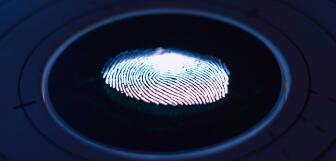
The most widely used method, fingerprint scanning reads the unique ridges and patterns on a fingertip. It’s common on mobile wallets (like Apple Pay and Google Pay) as mobile phones have been using fingerprint security for a long time. It increasingly appears on biometric-enabled cards with embedded sensors.
2. Facial Recognition
Face-based authentication uses a camera to map facial features for contactless verification. It’s being used in some pilot programs at retail stores but is more common at airport kiosks where speed and hygiene matter. The hospitality industry is also using facial recognition to improve security, but it’s not widespread as a payment method just yet.
3. Palm Recognition
Palm payment typically leverages vein-pattern analysis under near-infrared light, as seen in systems like Amazon One. It offers a contactless experience and high security, though specialised hardware is required at present, as fingerprint payments is far more accessible to most payment providers and the businesses using them
4. Iris Recognition
Iris scanning reads the detailed, unique patterns in the eye. It is extremely accurate but needs costly specialised sensors, so it’s mostly used in niche or high-security contexts rather than mainstream retail and hospitality.
5. Voice Recognition
Voice biometrics analyse vocal characteristics to create a voiceprint. It’s useful for phone banking and remote payments but is less practical for in-person retail due to environmental noise.
Biometric payment cards
Biometric payment cards are physical debit or credit cards with an embedded fingerprint sensor directly on the card body. Instead of entering a PIN for higher-value transactions, the cardholder simply places a finger on the sensor during payment. The fingerprint template is stored securely within the card’s chip, so biometric data never leaves the card or reaches the merchant or bank servers, meaning only the owner can use the card, and nobody (even the bank) has the fingerprint data except the person with the finger!
These cards have already moved beyond concept into real-world use. Several banks in Turkey have commercially rolled out biometric payment cards. In Bangladesh, Eastern Bank and Mastercard introduced the world’s first commercial biometric metal credit card, which supports fingerprint authentication for both contact and contactless EMV payments. In the UK, there have been small pilot programmes taking place for many years. For example, NatWest trialled biometric fingerprint-enabled bank cards with customers to authorise contactless payments way back in 2019.
The main benefits are clear: biometric cards work with any existing contactless terminal, requiring no merchant hardware upgrades, so it’s easy to integrate. They provide stronger authentication than PINs while maintaining convenience. However, they are still relatively expensive to produce, enrolment processes vary and are not yet standardised across issuers, and adoption so far has been slow compared with smartphone wallet biometric payments.
Looking ahead though, the biometric payment card market is poised for rapid growth. Market research projects a lot of growth throughout the remainder of the decade, with global valuations expected to rise from tens of millions today to several billion USD by 2030, making early adoption and investment potentially beneficial in the long-term.
Benefits of biometric payments for retailers
-
Enhanced security and fraud reduction: Anything that increases security in payments is highly valuable to businesses and banks alike. Biometric authentication significantly lowers fraud risk because unique biological identifiers are difficult to fake, helping reduce chargebacks and unauthorised transactions.
-
Faster checkout: Biometric checkouts can complete in under a second, busting queues for businesses everywhere.
-
Improved hygiene: Contactless biometric methods (e.g., face or palm recognition) remove the need to touch terminals or share devices, which helps create a more hygienic retail environment.
-
Future-ready positioning: Adopting biometric payments signals innovation and modern convenience to customers, helping retailers stand out as forward-thinkers in a competitive market.
Benefits of biometric for customers
-
Ultimate convenience: Customers can pay without a wallet, PIN, or phone by simply using their biometric trait, saving time, effort, and hassle.
-
Enhanced security: Because biometrics are unique and nearly impossible to replicate, they reduce the likelihood of stolen-credential fraud, offering users greater peace of mind.
-
Seamless experience: Biometric transactions are quick and intuitive, creating a smooth payment flow that feels effortless.
-
Data protection: Biometric templates are encrypted and stored securely, not as raw images, helping protect user data and privacy in a world that constantly seems to be searching for their data.
Real-world application by sector
Retail
In retail, biometric payments are increasingly used to streamline in-store checkouts. Some supermarkets and self-checkout lanes are experimenting with fingerprint and palm scanning to reduce queue times and improve security, while some high fashion outlets are piloting facial recognition kiosks to offer personalised VIP checkout experiences.
Hospitality & QSR
Cafés, restaurants and pubs/bars are looking at biometrics to speed up service and reduce friction at busy counters. For example, biometric face or palm scanners can help regular customers pay quickly after a night out without needing to fumble for cards or cash, and quick QR-linked facial or palm ID can accelerate order-to-payment cycles in quick-service restaurants. Nightclubs have used facial recognition in security for many years already, meaning that this sector is primed to lead the way in biometric technology throughout the next decade.
Entertainment
At entertainment venues like stadiums, festivals and cinemas, biometric payments are being trialled to improve crowd flow and reduce bottlenecks. High-volume events benefit from contactless biometric scan points that let ticket holders and concession buyers pay with a palm or face scan, which also integrates with access control and loyalty programs.
Mobile Wallets
Mobile wallets such as Apple Pay and Google Pay are the most common real-world form of biometric payment, using built-in fingerprint or facial authentication on smartphones and wearables. In the UK, 60% of adults are registered with a mobile or digital wallet provider, and more than half have used one to pay for goods or services in the past year (which they can do on a regular card machine!), highlighting widespread adoption of biometric-secured digital wallets like Apple Pay and Google Pay.
Emerging: Biometric Cards
Biometric payment cards with on-card fingerprint sensors are slowly entering markets beyond trials, offering cardholders the ability to authenticate contactless payments with their fingerprint without needing a smartphone, blending traditional card use with biometric security.
Security & Privacy Considerations
How Data Is Protected
-
Encryption (templates, not raw images): Biometric systems don’t store images of your fingerprint, palm, or face. Instead, they convert biometric scans into encrypted digital templates, making it extremely difficult for attackers to reconstruct the original biometric data.
-
Tokenization: Many biometric payment systems replace sensitive identifiers with tokens (as they do for regular card information) randomised surrogate values, so that even if intercepted, the token cannot be reverse-engineered to reveal the underlying biometric or payment credentials.
-
Local storage: Biometric templates are often stored locally on a secure chip (e.g., in a phone’s secure enclave or on-card secure element), which means users aren’t exposed in central databases that could be targeted in large-scale breaches.
-
Irreversible templates: The stored biometric template uses one-way mathematical transforms that cannot be reversed to recreate your fingerprint, face, or other traits, providing a layer of protection even if the template is compromised.
UK Regulations
-
Biometric data as “special category”: Under UK GDPR, biometric data used for identifying a person is classified as special category personal data, which has stricter protections due to its sensitive nature.
-
Data Protection Act 2018: This Act works alongside UK GDPR to set out conditions for processing special category data, with explicit consent often required unless another lawful condition is justified.
-
Key requirements: Because biometric data is legally treated as highly sensitive in the UK, businesses using fingerprint, face, or palm payments must clearly explain what data they collect and why, get explicit customer consent before using it, and give people control over their information whenever possible/relevant. Thankfully, a lot of biometric payments don’t require businesses to hold biometric information!
Common Concerns Addressed
-
“What if data is stolen?” Since biometric templates are encrypted, tokenised, and often stored locally, a breach doesn’t typically yield usable biometric information or payment credentials.
-
“Can systems be fooled?” Modern biometric systems incorporate liveness detection (e.g., detecting heat, depth, or movement) to distinguish real users from photos or masks, massively reducing fraud risks.
-
“What if I injure my hand?” Most systems can tolerate minor changes or allow re-enrolment; alternative authentication methods (PIN, device passcode, etc.) serve as fallbacks when needed.
-
Privacy best practices for retailers: Clearly inform customers about biometric use, obtain explicit consent, minimise data retention, implement strong encryption, conduct impact assessments, and offer a variety of non-biometric alternatives to respect individual choice.
Implementation for UK Retailers
Is your business ready?
Biometric payments make the most sense for UK retailers that process high volumes of transactions or want to deliver a faster, more modern customer experience. Supermarkets, convenience stores, fashion retailers, and event-led environments (stadiums, festivals, nightclubs) benefit most because shaving seconds off each checkout adds up quickly, while tech-savvy shoppers already expect to pay with a fingerprint or face via their phone.
They may be less urgent for smaller businesses, stores serving older or less technology-loving demographics, or retailers operating on tight margins. If footfall is low or most customers still prefer cash or chip-and-PIN, the return on investment may be limited in the short term, making it smarter to prioritise other upgrades and investments first.
EPOS Integration
The good news is that many retailers are already “biometric-ready” without realising it. Mobile wallets like Apple Pay and Google Pay use fingerprint or facial authentication on the customer’s device but, from the merchant‘s side, the transaction still looks like a standard contactless card payment. That means modern EPOS and contactless terminals can accept biometric-authenticated payments with no changes required.
For example, systems such as Epos Now already support these payments out of the box because they rely on existing NFC/contactless rails, making Epos Now Payments devices the perfect tool for any business looking to use biometrics. Looking ahead, standalone biometric terminals (e.g., palm or face scanners) are also being designed to work with standard payment protocols, so integration should be similar to adding any new card reader rather than a full system overhaul.
Cost breakdown for UK SMEs
-
Mobile wallet biometrics: £0, as these work with existing contactless payment devices most businesses already have.
-
Standalone biometric terminals: £500 - £2,000+ per lane, depending on hardware and vendor.
-
Biometric payment cards: £0 merchant cost, function like normal contactless cards.
Implementation steps
-
Assess customer readiness: Consider demand and your target demographics before investing.
-
Start with mobile wallets: Enable and promote Apple Pay/Google Pay first to see how many customers are using them.
-
Educate staff: Ensure teams can explain and support the process confidently.
-
Clear signage: Show customers biometric and contactless options at checkout.
-
GDPR compliance: Obtain consent where required and document data practices.
-
Monitor adoption: Track usage, speed, and customer feedback.
-
Stay informed: Watch evolving hardware, standards, and regulations to plan next steps.
Future of Biometric Payments in UK Retail
The simple truth is that it takes time for consumers to adjust to new technologies and the changes they bring to the way we do things. But biometrics has done the hard part: through mobile phones and wallets, it has become a part of everyday life through fingerprint technology. Already, 40% of UK adults would swap their housekeys for biometrics if given the opportunity. This acceptance will only grow as more people grow familiar with the technology.
Similarly, through trials and tests, the providers of this technology will find more effective ways consumers can use the technology in payments, maximising both security and efficiency in the field. Whether it’s biometric cards, palm recognition, and expansions to the services such as loyalty integrations, we haven’t yet seen the final form these payment methods will take.
UK regulations with FCA monitoring, payment and consumer protections will also develop in response to the changing industry. Laws will be written and amended over the coming years that businesses will need to be aware of and compliant with.
It may be that in the next few years, not too much changes as tests continue and only a few pioneers take on the technology, but in 3-5 years, the technology will likely become less expensive, leading to biometric methods like palm recognition starting to become mainstream. Beyond five years? Well, look at how common is contactless payments today when in only a few decades ago it was a twinkle in an innovators eye!
Whichever way the biometric payments market goes, Epos Now Payments will be ready to offer Epos Now users the opportunities they need to stay ahead in their industries. Already, mobile wallets with biometric payments are making quick and easy transactions on Epos Now devices. As the technology develops, Epos Now is ready to help you develop with it!
Frequently asked questions
- What are biometric payments?
-
Biometric payments let customers authorise purchases using unique physical traits, such as a fingerprint, face, palm, or voice, instead of a card, PIN, or password. These identifiers confirm identity instantly, making checkout faster and harder to defraud. It’s already common in mobile wallets like Apple Pay and Google Pay and is increasingly appearing in stores through cards and dedicated scanners.
- How do biometric payments work?
-
First, you enrol by scanning your fingerprint, face, or palm, which is converted into an encrypted digital template, which uses tokenisation as with other digital payment methods, so it does not resemble any physical traits. At checkout, a new scan is compared to this stored template. If it matches, your linked payment method is approved.
- Are biometric payments secure?
-
Yes, they’re generally more secure than PINs or passwords. Biometric traits are unique and difficult to replicate, reducing stolen-credential fraud. Systems store encrypted templates rather than images and often keep data locally on secure hardware. Many also use liveness detection to prevent spoofing with photos or fake prints, making attacks significantly harder than traditional card fraud.
- What types of biometric payments exist?
-
Common types include fingerprint recognition, facial recognition, palm scanning, and voice biometrics. Fingerprint and face authentication dominate mobile wallets, while palm scanning is gaining traction in contactless retail. Voice is mostly used for remote or phone payments.
- Do I need special equipment?
-
Not always. Most biometric payments today work through smartphones or wearables you already own, using built-in fingerprint or face sensors. Businesses can accept these via standard contactless terminals. Special hardware is only needed for newer systems like palm or facial recognition kiosks, which a few forward-thinking stores or venues install to enable dedicated biometric checkout experiences.
- What are biometric payment cards?
-
Biometric payment cards are debit or credit cards with an embedded fingerprint sensor. You place your finger on the card during a transaction to authenticate, removing the need for a PIN. Your fingerprint template stays securely stored on the card’s chip, not with the bank or merchant. They work with existing contactless terminals and combine traditional cards with added security, as they can’t be used if stolen!