How ID Scanners and Age Verification Systems Solve Retail Compliance
However, people often look older or younger than they really are (who hasn’t been told they look different to their age at some point?). So how do retailers make sure they get it right? Well, that’s when products like ID scanners and age verification systems come into play!
Technologies like ID scanners take the human error out of the equation, checking the age of customers buying alcohol, tobacco, and other restricted products and getting it right every single time. Sounds good, right? We think so. That’s why today we’re giving you a full scan of age verification systems profile to see if it checks out. We’ll cover:
-
What retail compliance is
-
The different kinds of age verification systems
-
Pros and cons of age verification systems
-
Other ways you can protect your business on retail compliance
So, before you start building up a queue at checkout, let’s check that ID for you!
What is retail compliance?
Retail compliance refers to a business’s legal responsibility to trade in keeping with local/national laws and regulations in terms of the products they sell and who they sell them to, whether that means making sure a customer has a license to buy specific products, is the appropriate age, or meets any other legally required conditions of purchase.
For retailers, this isn’t optional, nor is it something they can afford to ever get wrong. Failing to meet age-restriction requirements can lead to hefty fines, license suspension, legal action, and long-term reputational damage. In some cases, individual staff members can also face penalties. So this makes enacted compliance procedures and tools that help, like ID scanners, invaluable to retailers.
What retail compliance can include
You might already have an idea of what’s involved in retail compliance, but this is the time to be precise and thorough, so here’s a clear list of what compliance might involve:
-
Verifying customer age for restricted products
-
Checking identification/ID is valid, in-date, and government-issued
-
Maintaining transaction records
-
Training staff on local laws and when to refuse sales
-
Preventing fraud, use of fake IDs, and proxy purchasing (getting someone to buy restricted products for a younger person)
-
Meeting both licensing and reporting requirements
Age verification systems and ID scanners help retailers meet these obligations by standardizing checks, reducing guesswork, and creating consistent, defensible processes at the point of sale.
Age-restricted products and legal limits by region
Age limits are not the same everywhere. As you travel from country to country, state to state, depending on a person’s age, they may become able or unable to purchase certain products. So here’s a quick overview for three countries, the US, Australia, and the United Kingdom. Wherever you are operating from, be sure to know and enforce the restrictions of that region.
United States (US)
In the US, age restrictions are often set at the federal level, with certain products different state-by-state.
-
Alcohol: 21 nationwide.
-
Tobacco and nicotine products (including vapes): 21 nationwide.
-
Marijuana (recreational): Typically 21, but only legal in certain states.
-
Marijuana (medical): Varies by state; may allow younger users with authorization.
-
Caffeine / energy drinks: No federal age restriction (local or store policies are common).
-
Firearms and ammunition: Age limits vary widely by product and state.
Australia (AU)
In Australia, age-restricted sales are governed by state and territory laws, but age limits tend to be consistent nationwide.
-
Alcohol: 18
-
Tobacco and nicotine products: 18
-
E-cigarettes / vapes: Heavily regulated; legal access typically 18+ with additional restrictions
-
Cannabis: Illegal for recreational use; medical cannabis requires a prescription
-
Caffeine / energy drinks: No legal age limit, though retailers can enforce voluntary policies
United Kingdom (UK)
The UK enforces strict age-verification rules, backed by the mandatory “Challenge 25” policy.
-
Alcohol: 18
-
Tobacco and nicotine products: 18
-
Vapes / e-cigarettes: 18
-
Cannabis: Illegal for recreational use; limited medical use by prescription
-
Energy drinks: No legal age limit, but many retailers restrict sales to under-16s voluntarily
-
Lottery tickets and scratch cards: 18
Why this matters for retailers
Policies, age-limits, and penalties vary based on location, but knowing what each of these are for each product you sell is essential for knowing how your business needs to operate and what training you need to give your staff. This then helps them rely on visual judgment, which can put your business at risk.
From ID scanners to prompts programmed into your POS system, helping automate and encourage the confirming of customer ages and their eligibility, setting up your age verification system is what helps retailers stay compliant and avoid costly mistakes.
Different age verification systems
In the past, retailers had to visually check every ID if they wanted to confirm a customer’s age. This takes longer and relies on staff correctly calculating the age of the customer based on their date of birth. Today however, there a number of advanced tools they can use instead. Here are a few examples:
ID scanners
ID scanners are perhaps the most common and reliable age verification tools out there, used in both retail and hospitality. These devices scan the ID, whether it’s a driver’s license or passport, and verifies not only the customer’s date of birth, but the validity of the ID. This removes the need for manual calculation and reduces human error.
Simple. Efficient. Effective!
POS-integrated age verification
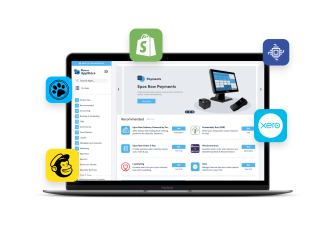
Some point-of-sale (POS) systems like Epos Now’s include built-in age prompts that alert staff when restricted items are scanned. These systems don’t verify age on their own. Rather, they ensure staff perform a manual check and tell them when to do so, removing the possibility of forgetting to check ID when selling a restricted product. Paired with an ID scanner, POS prompts help create a smooth and fully compliant checkout process.
Online and digital age verification
For retailers selling online or offering click-and-collect, digital age verification tools are a requirement. Online age verifiers use databases, document uploads, or identity checks before retailers accept ecommerce or Click&Collect orders to effectively screen sales when they aren’t physically present and able to show their IDs, extending compliance beyond the physical checkout point.
Biometric age estimation
Biometric age estimation uses facial analysis to estimate a customer’s age without the need of ID. A camera captures images of the customer’s face and uses analytic software to predict whether they are the required age. This is fast and requires nothing from either the staff or customer, but only really functions as a pre-screening tool to establish whether a full ID check is required. This is partly because the estimates this technology makes are not legally definitive in many places.
Mobile ID and digital wallet verification
The 2020s are starting to see digital IDs becoming more prevalent. In late 2025, the UK has been discussing introducing digital ID, which would be stored in secure digital wallets will be authenticated in stores. For retailers, mobile ID verification offers convenience and security, but adoption varies by region and legal acceptance is still developing.
Self-checkout age verification systems
At self-checkout kiosks, age verification systems prompt staff intervention or digital approval when restricted items are scanned. These may include staff validation, ID scanning, or remote approval via a central terminal, and are common in large supermarkets where sales occur rapidly. As self-checkout adoption grows, these systems are becoming critical for maintaining compliance without disrupting the customer experience.
Pros and cons of ID scanners
Pros
-
Improved accuracy and consistency. ID scanners automatically calculate age from a valid ID, removing guesswork and reducing the opportunity for human error.
-
Stronger compliance protection. Many scanners detect expired or fake IDs and create a record of the check. This helps retailers demonstrate their compliance if audited.
-
Faster, more confident transactions. Scanning an ID is quicker than manual checking, allowing staff to process restricted sales efficiently while remaining confident they’re compliant with rules and regulations.
Cons
-
Upfront cost and setup. ID scanners require an initial investment in hardware, software, and training, which may be a barrier for some smaller retailers.
-
Customer privacy concerns. Many customers will be hesitant about having their ID scanned, making clear communication crucial, explaining how data will be used.
Other ways to protect your business
It’s important to remember that an age verification system alone, while it goes a long way, won’t take care of everything you need to be compliant. These systems are most effective supported by policies, processes, and indicators that your business is compliant. So here are a few more tips to protect your retail business.
Clear and detailed policies
Policies your staff can refer to offer clear guidance on what steps they should take surrounding the display, handling, and sale of restricted products. This means clear policy on acceptable forms of identification, how and when to refuse sale, what to do in the event of confrontation, and any other foreseeable situation.
Clear procedures build consistency across your business and help demonstrate due diligence to regulators even in the event something goes wrong.
Challenge 21 / Challenge 25 policies
Challenge-based systems require staff to ask for ID from anyone who looks under a certain age, typically under 21 or 25, depending on the policy (which varies from place to place). These approaches provide a safety buffer when assessing a person’s age and are common in the UK and Australia.
Clear in-store signage
Signage plays an important supporting role in age verification. Visible notices stating age limits and ID requirements set expectations before customers reach the counter, backing up your staff, deterring underage customers from attempting illegal purchases, and reducing friction at your checkout.
Displaying signs such as “We ID under 25” or “Valid ID Required for Restricted Products!” show your clear intent to remain complicit, reinforce staff decisions, and make refusals feel like policy, not personal judgment.
Retail compliance: easy with the right tools and preparation
Compliance, for retailers, is about more than just following the rules; it’s about protecting your business, your staff, customers – everybody! Age-restricted products bring the potential for serious legal and financial consequences, so relying on visual judgement just isn’t enough!
ID scanners and age verification systems offer reliable, consistent confirmation of eligibility, reducing the risk of any mistakes. You can build your system with a combination from tools like POS prompts, facial scanners, and online eligibility checkers. Combined, these tools and policies your business enacts can ensure your business and customers remain safe!
Enjoy this blog? Take a look at Epos Now’s resources to read more.