Payment Trends in 2026: Evaluation and Predictions
At Epos Now, we surveyed our merchants and their perspectives on payment trends. The data is a diverse mix, heavily focused on the Hospitality (40.8%) and Retail (31.9%) sectors, and primarily based in the UK (40.6%) and the US (31%). Today, we’re delving into several important insights for small to medium business owners, including:
-
The continued growth of cashless payment methods.
-
The prevalence of, and interest in, AI-powered tools or features in payment systems.
-
The biggest challenges businesses face are around their payment systems.
Ready to get the inside scoop on card payment in 2025? Then let’s get into it!
Digital Dominance: What’s Happening and What Comes Next
Contactless & the Digital Wallet
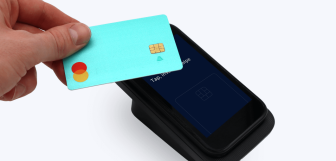
The upward trajectory of the mobile payments industry is expected to continue in 2026, following the trends seen across the first half of the decade. Survey data shows that 96.5% of our merchants already have contactless / tap-to-pay options, and 90% accept chip & in / swipe payments. Card is still king, but mobile payment methods are continuing to see huge market growth. In 12 months, over 50% of our merchants saw an increase in contactless payments.
What about the future, then? SMEs can continue to expect mobile payments to grow and accelerate. In fact, our merchants identified contactless payments (70.2%) and digital/mobile wallets (62.7%) as the main payment trends they expect to see impacting their business in the next 3-5 years.
This can likely be linked back to the COVID-19 pandemic. As businesses had to adapt to the material conditions of a lockdown, it made sense to adopt a cashless economic outlook. This lines up with our data, where a quarter of our merchants actively encouraged customers to go cashless (25.4%), and a similar amount reduced the use of physical cash (22.4%) during the pandemic.
The Resilience of Cash
Despite the clear prevalence of contactless payments, cash is on the ropes but not tapping out just yet.
Our merchants report a 95.5% cash acceptance rate, nearly the same as for contactless payments, and while 50% of them have seen an increase in contactless usage, 30.9% reported it staying the same, and nearly 20% saw a decrease.
This all suggests that cash remains an essential backup and a payment method for a significant minority of customers within the retail and hospitality space. Despite having a shrinking share of all transactions, it is far from obsolete!
Niche Payment Methods, and Those Adopting Them
While mobile payments and cash remain a large part of the payment market share, they don’t make up the whole thing. Niche options do exist, but lack the constancy of cash and the rapid adoption of mobile payments. Our merchants report just a 3% acceptance of Buy Now, Pay Later schemes (think Klarna, Afterpay), 2.5% acceptance of QR code payments, and a 0% acceptance of cryptocurrency.
Despite these low numbers, our merchants do expect to slightly increase their adoption of BNPL schemes, expecting around 5% use in the second half of the decade. This does still suggest a slow, focused growth.
SME Business Challenges
The Overwhelming Pain Point
With the new year on the horizon, it is important to examine the problems and frustrations business owners are facing with their payment systems and expect to face in the future.
High transaction fees (77.6%) are the dominant challenge faced by our merchants, far outpacing all other concerns in the area. This is reinforced by further data, with business owners citing lower transaction fees (50.8%) as the single improvement that would most enhance their payment system experience. For most businesses in 2025, the "evolution" isn't about looking forward to new tech, but about making the existing, necessary tech more affordable.
The AI Wave
High Importance, Low Current Use
The last year has seen “artificial intelligence” become synonymous with growth within the business world. Everywhere you look, you will hear many voices singing its praises. But, according to our survey, only 2.5% of our merchants are actively using AI features, and nearly 50% have no plans to adopt. This is in stark contrast to opinions on the importance of keeping up with emerging technology and trends for a business; in fact, 73.2% of our merchants rated emerging tech and trends as important to their business outlook.
So, why the hesitation to adopt AI?
This data shows that the market is “AI curious”. The gap between adoption figures and the importance of modernizing implies a significant education gap regarding the benefits AI can bring to your SME.
Anticipated AI Benefits
Given this aforementioned education gap, what can AI bring to your business?
Our more AI-positive merchants have named several expected benefits:
-
Improved fraud detection & prevention (44.8%)
-
Personalised customer experiences (43.3%)
-
Smarter sales and payment insights (37.8%)
-
Reduced human error (38.3%)
-
Better inventory/payment forecasting (30.4%)
From those interested in the technology, AI is clearly seen as a tool to enhance security, streamline workflows, and provide a clearer customer experience.
Positioning for Progress
The Epos Now 2025 Payment Trends Survey has provided key insights into the current and future state of businesses and their payment methods. Contactless payments and mobile wallets are the future, driven mainly by customer preference.
Transaction fees and system reliability are the most critical issues SMEs are facing right now. Innovation in the AI space currently faces minimal adoption, but the long-term solutions it could provide in efficiency and security are on people’s radars.
While 48% of our merchants have no plans for major shake-ups in their payment technology, over 33% of them will be implementing changes within the next 12 months. A significant, imminent push for system modernization is going to happen soon, driven by the need for reduced costs and increased efficiency.
Ultimately, the “evolution of transactions in 2026” won’t be about adopting brand-new payment types. Instead, businesses are working towards optimizing their digital cores: making established systems faster, more secure, and, perhaps above all, cheaper.
An EPOS system (electronic point of sale system) allows for straightforward payment processing through devices such as tablets, smartphones, or watches. Epos Now is a leading EPOS provider, providing essential tools to SMBs across the world. Take a look at our systems(link) to see how Epos Now could help your business!